One place for every idea
The first planning problem most creators have isn't a lack of ideas; it's that ideas live in six places at once. A voice memo here, a screenshot there, a note app you opened once, the back of a receipt. Each scattered idea becomes a small, nagging obligation. David Allen's Getting Things Done called this "open loops", and the fix he proposed still works: a single trusted inbox that everything goes into without judgement.
Your inbox can be a paper notebook, a plain text file or a board in an app such as Notion or Trello. The tool matters far less than the rule: if an idea occurs to you, it goes in the inbox in under thirty seconds, and you don't evaluate it at the moment of capture. Evaluation happens later, in a calmer state.
Capture is fast and forgiving. Deciding is slow and deliberate. Keep them on different days.
The thirty-minute weekly review
Once a week, at roughly the same time, open the inbox and sort it. A Sunday afternoon or a Monday morning both work; what matters is that the slot is protected. During the review, every item goes one of three ways: into the project list, into a "someday" file, or into the bin. Being allowed to delete ideas is an underrated relief.
- Empty every capture point into the main inbox.
- Sort each item: project, someday, or delete.
- Choose no more than two videos to move forward this week.
- For each, write the very next physical action ("draft hook", "scout window light").
- Block those actions on your calendar, with buffer either side.
The limit of two is deliberate. Independent creators often juggle client work, a day job or caring responsibilities. Choosing fewer videos and finishing them builds more confidence than starting five and stalling on all of them. Kanban practitioners call this a work-in-progress limit, and it applies to a one-person channel as much as to a software team.
From idea to outline
An idea becomes filmable when you can state it in one sentence and name what the viewer will understand or feel by the end. Before scripting, write that sentence at the top of a blank page. Then list three to five beats — the moments the video must pass through. Many creators find the classic structure of hook, context, body and close useful; others prefer to think in scenes. Either way, the outline should fit on one screen.
Only once the beats feel right is it worth writing a script or talking points. Writers such as Twyla Tharp in The Creative Habit describe keeping a box of research for each project. A simple folder per video, with the outline, references and rough notes, does the same job and makes the project easy to pick up after a gap.
Writing a shot list you will use
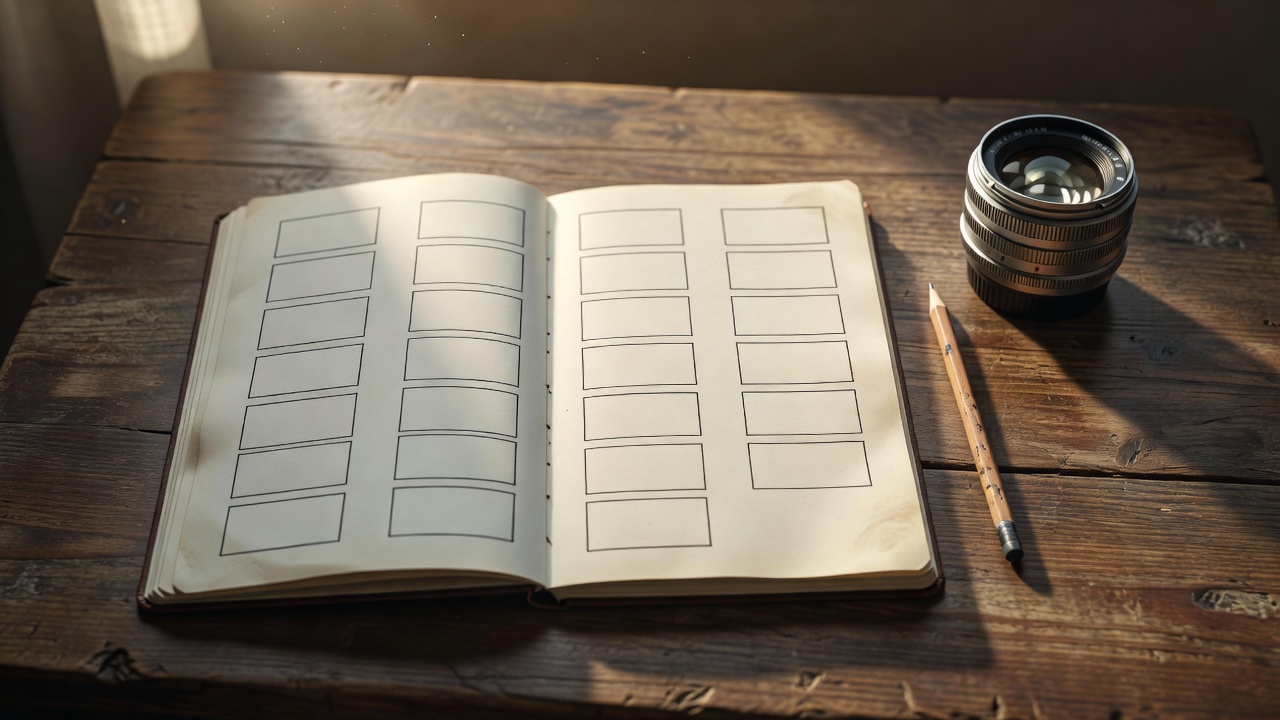
Shot lists fail when they are too ambitious. A good one for a solo creator has four columns: number, location or setup, description, and a tick box. Group shots by setup rather than by script order, so you only move the light and tripod once. Mark the essential shots with a star; if the day goes badly, those are the ones you film first.
- Group by setupFilm all desk shots together, then all window shots, regardless of script order.
- Note the lightWrite the time of day each natural-light shot needs, and schedule around it.
- Leave a spare lineRoom for the shot you didn't plan but notice on the day.
When the plan breaks
It will. A neighbour starts drilling, a child is home sick, the light disappears behind cloud. The value of a plan is not that it is followed exactly but that it tells you what to do next when things change. Keep a short "plan B" list of tasks that need no camera — writing titles, sorting B-roll, cleaning lenses — so a broken shooting day can still move the project forward.
Returning is part of planning too. If a week slips entirely, the next weekly review simply starts from where the inbox is. There is no backlog of shame to clear, only a new choice of two things to move.